Aesthetic Warfare
Manifesto for an Aesthetic Warfare as a Means of Shaping and Reviving Culture and Community
Intro
Culture and community is what makes us human. No matter whether you support old traditions and
strong families, free arts and international solidarity, or just any small subculture, I think that this is
something almost all of us can agree on. Yet, all of these values seem to loose relevance in the greater
scope of politics and society, becoming less important every year. We will try to figure out this
development in the first part of this article. The second part will outline ideas on how to fight this
development, closing with Aesthetic Warfare, which combines aspects of everything discussed before it. Third
part serves as declaration of foundation of the
On Passiveness
On Societal Individualism
Us humans, we are not egoists by nature. When there is enough for everyone, we share happily. You can see this happening with children, or inside of alternative and religious groups, inside of most subcultures and of course in charity. But children grow up and all of these communities are dying out. With every generation, more and more people value their individual success and wealth higher than culture and community. They don't donate, are not part of a sports club and don't participate in subculture. They forgot what their parent's religion and their grandparent's traditions are about. They are the dominant group in all of politics and economy. And not only do they weaken our cultures and communities, but might even destroy them entirely. Take the immense decrease of birth rates as an example, or perhaps climate footprints as another. More than that, there's a rising political polarization that we will get into later.
So let's talk about government and economy, about the people pushing this development. A modern government has well-educated full-time personnel, with scientists, experts, CEOs and workers always at their disposal to advise them. They should be able to uphold diplomatic relations, prevent resource scarcities and overcome social issues. But they don't. They are assimilated from common society and act according to the norms and benefit of those around them: the most privileged and influential. Even if true idealists were to enter parliament, they would find themselves working not only against their colleagues, but also a dense network of companies, institutions and bureaucracy. You can catch glimpses of sketchy deals, unlawful procedures and closed-door meetings yourself in most city councils, court rooms and police stations. And you don't have to visit Romania, Bulgaria or Georgia to see plain corruption. You can take a look at Nicolas Sarkozy, Petr Nečas, Pedro Sánchez, Sebastian Kurz, José Sócrates, Robert Fico, Andrej Babiš or Olaf Scholz as well, amongst others. All of them have been a major European head of state in the last 15 years, and there's surely a lot more we will never know about. Meanwhile we are so busy with our individual lives that we don't even care about it.
On Controlled Opposition
Luckily, there's a big network of opposition parties, NGOs, activist groups and media companies building large communities online and offline, calling out corruption, mismanagement and rigid structures. There's real democratic discourse about every little thing and our brightest intellectuals and most talented activists are busy participating in it. And even though most of us want nothing more than a life without fear, hunger, poverty and loneliness, we find ourselves fighting against each other over the details. We are trapped in politics just like parliament parties. And paradoxically, the more radical a group presents itself, the more corrupted it usually is. Take the New Right movement as an example, which gains financial and diplomatic support from billionaires and secret services from Russia, the US, Israel and China. At the arsenal of their donors are social media bots occupying comment sections and radicalizing the youth into the most authoritarian of ideologies, like plain fascism, orthodox marxism or violent jihadism. Instead of thinking freely, they subject themselves to additional hierarchy, state oppression and psychological operation.
The truth is that we are not fighting a single entity here. It goes deeper than the concepts of a ruling class, dangerous elites or a deep state. Because while powerful politicians and the ultra rich have huge control over politics, communities and cultures, which they use to establish certain conceptions and dynamics that secure and broaden their influence, your local city councillors and store owners do exactly the same thing, just on a smaller scale. And so do opposition parties, NGOs, activist groups and media companies. Similar to what the Hidden Wiki calls "Matrix", it's the establishing of some form of hierarchy, economy and politics into every aspect of community and culture that brings them down. So the Hidden Wiki came up with a few ideas to fight this status quo in cyber space specifically, and in the following paragraphs, we will look at some more concepts ourselves.
On Activeness
On Self Optimization
Individualism isn't the only thing paralysing our communities and cultures. There are also people profiting directly and indirectly from our caffeine, weed, nicotine, alcohol and drug addictions, from gambling, consumerism, and most of all, dopamine dependence. They try to distort our views, kill our intellect and keep us from exploring the world around us. We need to resist, get off our phones, stop listening to music or watching shows only to drown out the silence, and spend more time and money on our health, education and creativity instead. It won't be easy and anyone trying will soon reach days where the craving for unhealthy habits becomes almost unbearable. It's an addiction after all. So you need to develop mechanisms like changing your surroundings or rewarding yourself for pulling through. A lot of discipline is needed before you can notice how your view on the world becomes clearer.
On Egoist Collectivism
Once the individual is free, it can build new communities, with loose structures and focussed on helping each other to learn and create, not to gain money or influence. At first, we need to connect with people we can exchange favours with and who can teach us things we can't teach ourselves. Build networks parallel to the "Matrix". It will take time and you won't immideately be friends with anyone you meet. But with persistence you will stumble upon people you actually enjoy being around. People who inspire you and matter to you, real friends, with whom new and own projects and communities will form naturally. You efforts might not pay off immideately, but some day they will. So go out there, join a sports club, engage in an initiative, visit places of worship and talk to strangers.
On Contemporary Illegalism
Illegalism is a 150-year-old anarchist ideology that uses crime for economical redistribution, defiance of state power and a call to question state authority. It remains popular amongst criminals like shoplifters, telling you how stealing from big corporations is different to stealing from your neighbours, or Utrecht's Audi Gang, which blows up ATM machines to get rich without hurting a fly. Any violence against humans would destroy their moral high ground over state authority, still they were embraced by various rappers across Europe, reaching millions of youths who now question the moral authority of law a little bit more. One of the most visible, most victimless and most popular crimes however is graffiti. People don't even do it for money or power. It's mere existence challenges authority, and it's a gateway to libertarianism and crime, but also art and outdoor subculture.
On Accelerationism
Accelerationism was outlined by the leftist intellectuals Alex Williams and Nick Srnicek in a manifesto called #ACCELERATE and is centred around the idea that increasing progress in technology can open up increasingly efficient ways for the fight against capitalism. This gives the radical left a broad spectrum of non-violent alternatives to riot and revolution. Today's largest accelerationist group however are white supremacists, using the newest technologies to spread hate online and carry out lone wolf terror attacks, trying to destabilize society in hopes of starting a "race war". They follow the false assumption that a weak society causes weak institutional power, when in fact, it's quite the opposite, but they teach us that keeping up with changes in technological and social advancements is not enough – we need to pioneer them and develop them ourselves if we want a chance in fighting hundred times bigger propaganda machines.
On Aesthetic Warfare
If you already heard of any ideology touched on so far, you probably didn't learn about them through primary sources. Perhaps you listened to a podcast, watched a video on it or read an article. But most people learn about them through spread of mouth, and art. In the past, music genres have created and shaped entire movements and ultimately whole cultures and communities. Today, memes and video edits are at least equally effective, and the influence of fashion, street art, paintings and stickers can’t be understated either.
"Culture wars are won through aesthetics. Aesthetic warfare is a battle for cultural currency, where people, ideas, and ideologies compete for dominance. Aesthetic wars are waged through frameworks of visual, sensory, and ideological coherence — or the deliberate rejection of them."
The Aesthetic is the Art now, by Anu
Of course, nobody is at fault for lacking the time, motivation or intellect to read complex political literature. Instead, an avant-garde has to be formed, summing up and explaining complex concepts in podcasts, videos and articles, or music, memes, video edits, and so on. In accordance to the principles of self-optimization, egoist collectivism, contemporary illegalism and accelerationism, members of this avant-garde need free minds and decentralized networks to support each other, guided by values, not laws, and using the newest of technologies to their advantage. They can help traditions and subcultures survive by contributing to their media, distributing their aesthetics and keeping them up-to-date. They can create and popularize new aesthetics, promoting specific values and planting new ideas in people's heads. It's a fight that will never end. But the impact of anything authentic is grave, and will shape generations to come.
Appendix
Declaration of Foundation of the
When I started work on
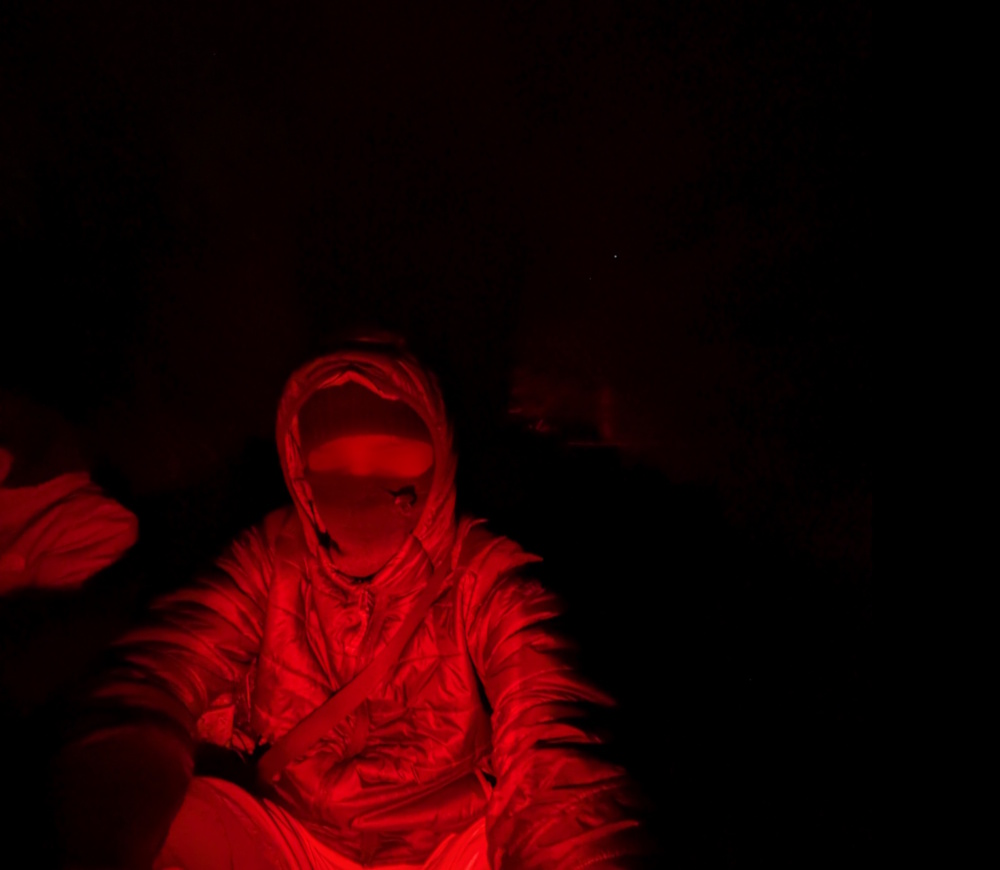
So I spent some weeks on creating a coherent brand identity, taking inspiration from graffiti, motor sports, ultras, hooligan and insurgence aesthetics, which share themes like competition, illegality, covered faces and rejection of authority. Many friends helped me build this website, read over this article, supplied me with photos, and gave me insights into various subcultures.
We will keep connecting and creating, curating and distributing aesthetics. What's planned already are some short essays, small art projects, and one day clothing and accessories - but there's a lot to do until then. If you want to stay up to date on what we're doing, consider following us on Telegram or Instagram, and invite a friend over too. More importantly though, we'd love to see you join the avant-garde and start your own projects and communities. I'm sure we will hear from each other!